By the spring of 1933, the American economic empire was not merely in decline; it was in a state of total systemic failure. Industrial production had been halved, one in four able-bodied men was idle, and the banking system had effectively ceased to function. For three years, the "liquidationist" orthodoxy—the belief that the economy must purge itself through pain—had only deepened the abyss. Then, the trend reversed.
We often speak of the Great Depression as a singular tragedy, but its "collapse"—its definitive end—was a calculated, three-stage demolition of the old economic order. It required the destruction of the Gold Standard, an accidental 17% annual expansion of the money supply, and the largest state-led industrial mobilisation in human history. To understand what caused the collapse of the great depression, we must look past the breadlines and into the cold mechanics of currency devaluation and debt-funded recovery.
How did the Great Depression finally end? (Quick Answer)
The Great Depression did not end due to a single policy, but through a sequence of three major shifts. First, the abandonment of the Gold Standard in 1933 allowed the U.S. to devalue the dollar and stop the deflationary spiral that made debts impossible to repay. Second, a massive monetary expansion, driven by gold inflows from a destabilised Europe, grew the money supply by nearly 17% annually between 1933 and 1936.
Finally, while the New Deal provided a vital social safety net, it was the total mobilisation for World War II after 1940 that provided the definitive "exit". Government spending skyrocketed from 15% of GDP to over 40%, creating a state of over-full employment that permanently buried the Depression-era economy.
1. Breaking the Golden Noose: The 1933 Pivot
For decades, the Gold Standard was the "orthodoxy" of the imperial world. It was a system of hard discipline, but in 1929, that discipline became a noose. Because the dollar was pegged to gold, the Federal Reserve could not expand the money supply to combat the crisis without risking a run on its gold reserves.
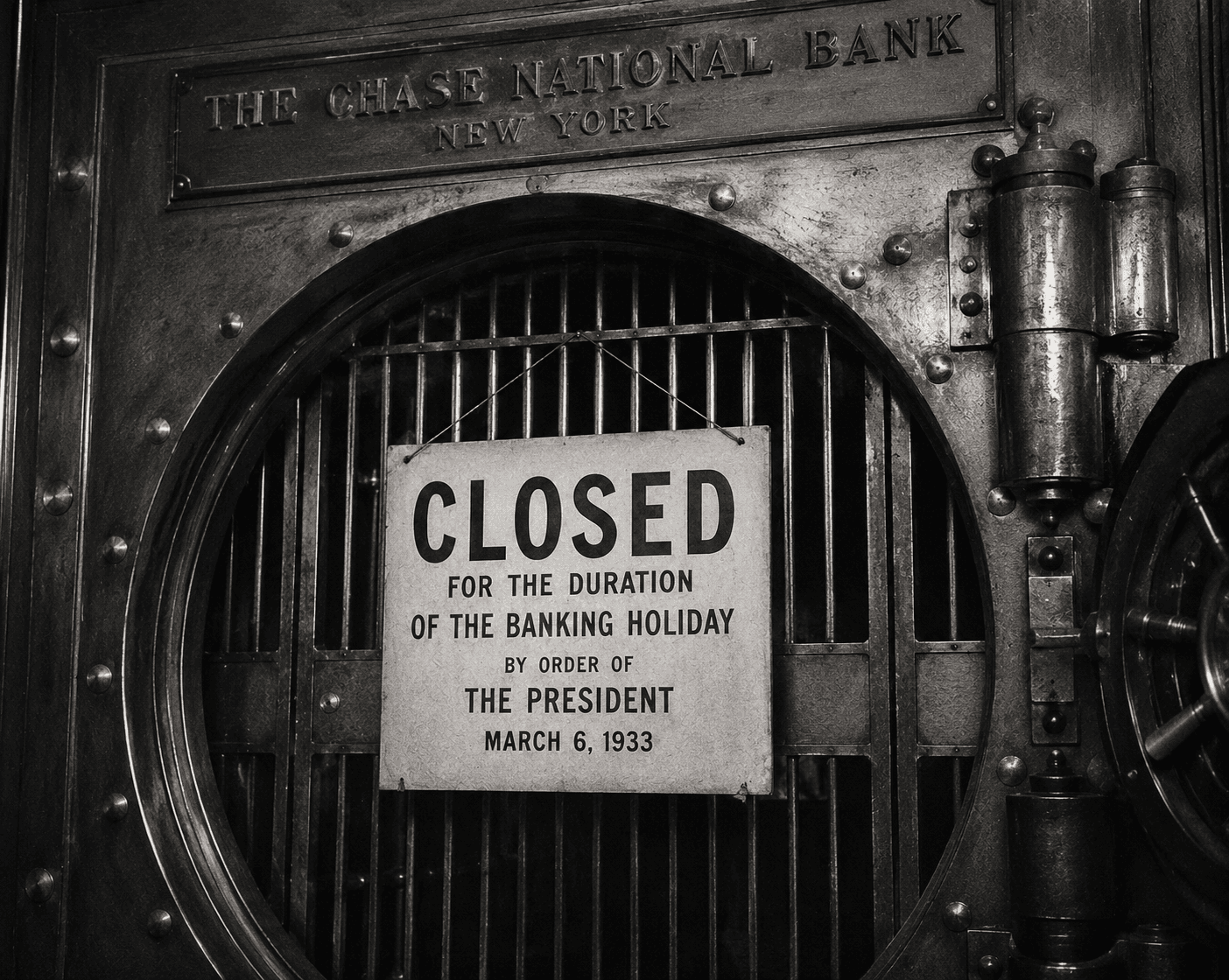
When Franklin D. Roosevelt took office in March 1933, he executed the most important economic pivot of the century. By suspending gold convertibility and later passing the Gold Reserve Act of 1934, he effectively devalued the dollar from $20.67 per ounce of gold to $35.00.
This wasn’t just a technicality; it was a signal to the markets that the era of falling prices was over. Devaluation broke the "deflationary expectations" that were killing the economy. If you knew your money would be worth less tomorrow, you would spend it today. This psychological shift turned the tide of consumer demand before a single New Deal shovel hit the ground.
2. The 17% Solution: The Power of Monetary Expansion
While history books focus on the alphabet soup of New Deal agencies (WPA, CCC, PWA), many economists argue that the "real" recovery was driven by a sheer flood of money.
Between 1933 and 1936, the U.S. money supply grew at an astounding rate of nearly 17% per year. This wasn’t necessarily a deliberate choice by a passive Federal Reserve; instead, it was driven by gold inflows from a destabilised Europe—capital fleeing the rise of Nazi Germany to the safe haven of the dollar. Because the dollar was now cheaper, that incoming gold translated into a much larger volume of domestic currency.
This "accidental" monetary stimulus lowered real interest rates and made it profitable for businesses to invest again. Consumer spending on durable goods like cars and machinery rebounded long before general service spending.
3. The New Deal: Fiscal Muscle or Social Band-Aid?
We cannot discuss the collapse of the Great Depression without the New Deal. However, its role is often misunderstood. By the numbers, the New Deal’s fiscal stimulus was relatively small. Federal deficits during the 1930s averaged only about 3% of GDP—a fraction of the 10-15% deficits seen in modern crises.
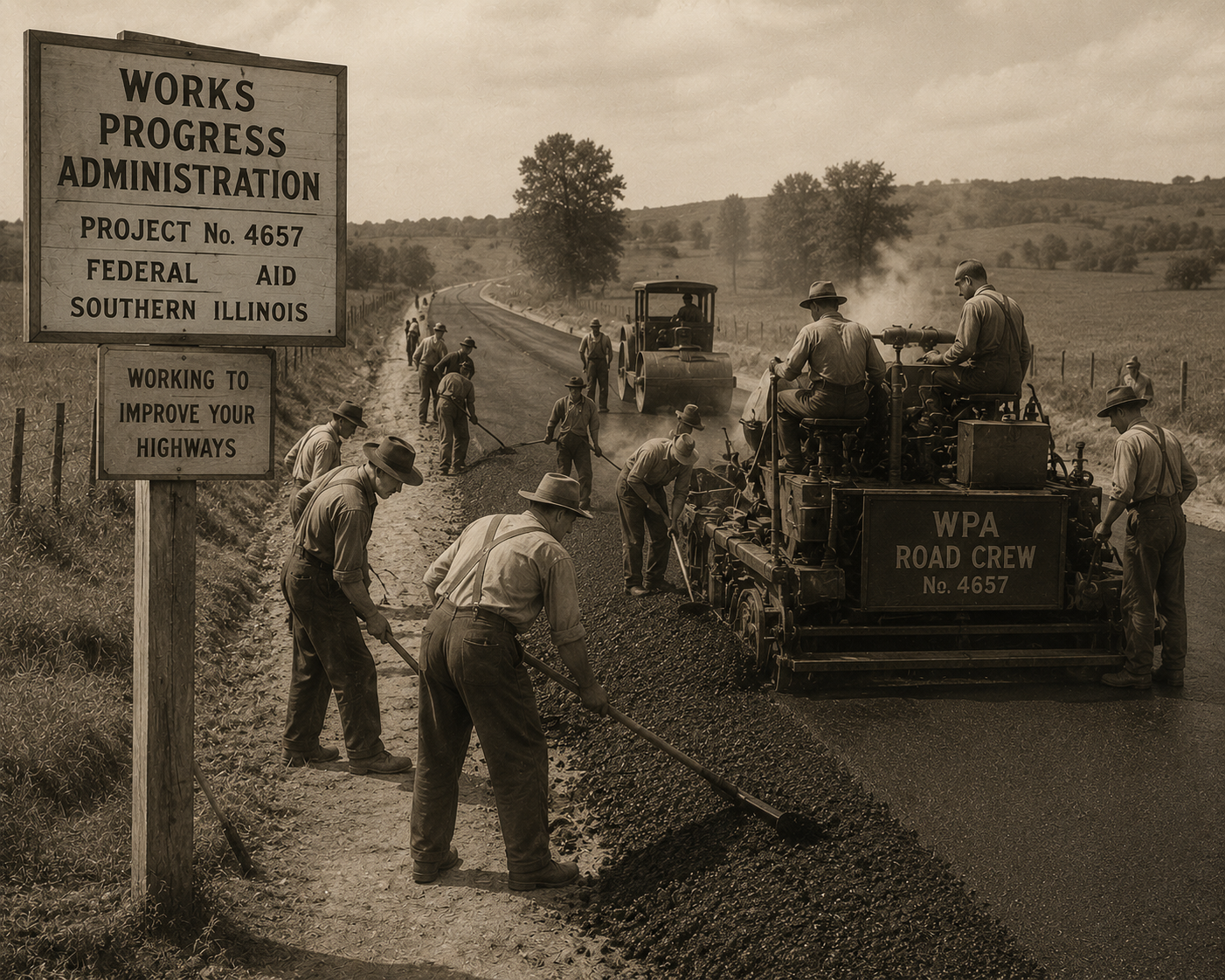
The true value of the New Deal was in restoring the velocity of money. By putting millions of people to work on infrastructure projects through the Works Progress Administration (WPA), the government ensured that money was changing hands at the bottom of the pyramid.
- The WPA built 650,000 miles of roads and 125,000 public buildings.
- The PWA funded the Hoover Dam and the Grand Coulee Dam.
- Social Security (1935) created a permanent floor for consumer demand among the elderly.
While these programs didn't "cure" the Depression on their own, they prevented the social collapse of the empire while the monetary gears were grinding back into place.
4. The 1937 Mistake: A Warning for Modern Central Banks
By 1936, it looked like the crisis was over. GDP was approaching pre-crash levels. Fearful of inflation, the Federal Reserve decided to "normalise" policy. They doubled reserve requirements for banks, while the Treasury began "sterilising" gold inflows. Simultaneously, FDR tried to balance the budget by cutting spending.
The result was a disaster: the Recession of 1937–38. Industrial production plummeted 30%, and unemployment jumped from 14% back to 19%.
This "depression within a depression" proved that the recovery was still fragile. It serves as a permanent lesson for modern central banks: withdrawing stimulus too early can be just as dangerous as not providing enough. The 1937 mistake delayed the final recovery by at least three years.
5. Total Mobilisation: How WWII Buried the Depression
If the Gold Standard pivot was the "spark" and the New Deal was the "fuel," then World War II was the "inferno" that finally consumed the Great Depression.
In 1940, the U.S. unemployment rate was still 14.6%. By 1944, it was 1.2%. This wasn't achieved through efficient market dynamics, but through the temporary suspension of the market economy itself.
- Defence spending went from $1.5 billion in 1940 to $83 billion in 1945.
- The National Debt exploded from $43 billion to $259 billion.
This massive "forced" investment in industrial capacity didn't just end unemployment; it modernised the entire American empire. Factories built to churn out B-24 bombers were converted to produce cars and appliances for the post-war middle class. The Great Depression didn't "fade away"; it was steamrolled by the requirements of total war.
What This Means Today
The "collapse" of the Great Depression offers three critical lessons for the modern empire:
The Psychology of Deflation
The 1933 pivot shows that expectations matter as much as reality. When the world expects prices to fall, they hoard cash. Breaking that cycle requires "regime-change" level policy shifts—whether it’s abandoning a gold standard or the massive Quantitative Easing (QE) of 2020.
The Debt-Growth Paradox
The recovery was built on a mountain of debt. In 1945, the U.S. debt-to-GDP ratio hit 112%. Many feared immediate bankruptcy. Instead, the industrial capacity built by that debt fueled the greatest economic boom in history. Debt is only "unsustainable" if it fails to build productive capacity.
The Dangers of "Early Victory"
The 1937 recession is the ultimate cautionary tale. Withdrawing support from a recovering economy based on "budgetary prudence" often costs more in the long run than continuing stimulus until the recovery is self-sustaining.
Frequently Asked Questions
Was the New Deal the main cause of the end of the Great Depression?
While the New Deal provided essential relief and infrastructure, many economists argue that the abandonment of the gold standard and the subsequent 17% annual growth in the money supply were more significant drivers of the initial recovery.
Did World War II actually end the Great Depression?
Technically, the recovery was underway by 1933, but WWII solved the "unemployment problem". Massive military spending returned the economy to full capacity and created a state of over-full employment.
Why did the recovery take so long (1933–1941)?
The recovery was slowed by the extreme depth of the initial 1929-32 crash and the "1937 Mistake," where the government prematurely cut spending and raised interest rates.
How did the Gold Standard make the Depression worse?
The gold standard acted as a "straitjacket," preventing central banks from lowering interest rates or expanding the money supply because they had to maintain a fixed exchange rate with gold.
Is there a modern equivalent to the 1933 gold standard abandonment?
The massive Quantitative Easing (QE) launched during the 2008 financial crisis and the 2020 COVID-19 pandemic are considered the modern equivalents of the 1933 monetary expansion.
What happened to inflation after the money supply grew by 17%?
Surprisingly, inflation remained relatively low during the mid-1930s because the economy had so much "excess capacity"—there were enough idle factories and workers to increase production without driving up prices.
How did the 1937 recession impact the Great Depression?
It proved that the recovery was fragile. It extended the total duration of the Great Depression by several years and shifted the focus toward even more aggressive spending.