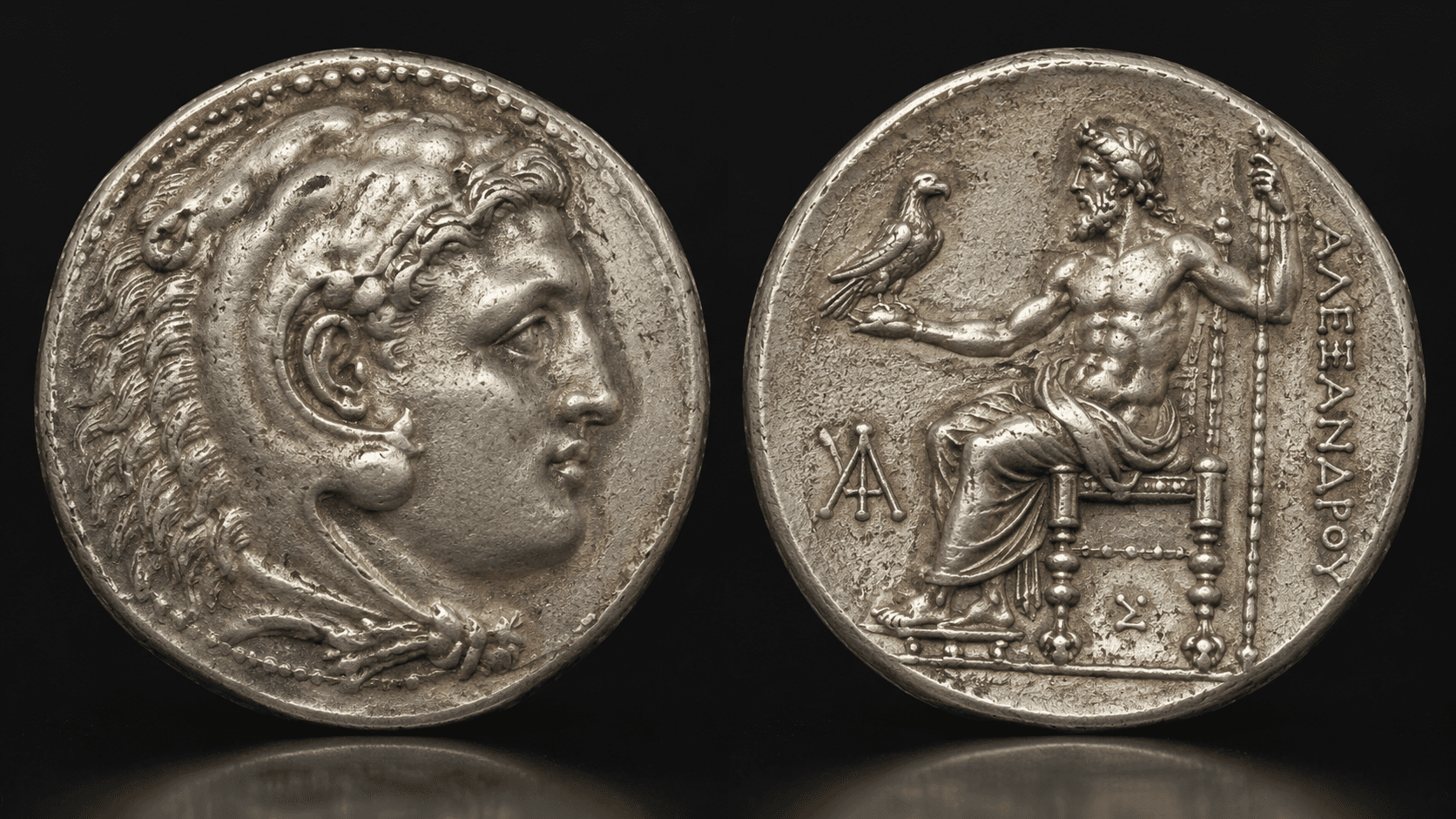
The most revealing fact about the Great Depression is not how it started, but how it ended. The countries that escaped fastest all did the same thing: they abandoned the gold standard. Britain left in September 1931 and began recovering by 1934. The United States held on until April 1933, and its recovery began shortly after. France, the last major economy to leave, stayed on gold until 1936 — and remained mired in depression until it did. The correlation is one of the most consistent findings in interwar economic history.
This is not a coincidence. The currency system behind the Great Depression — the interwar gold standard — was not merely a backdrop to the economic catastrophe. It was a mechanism that transmitted crisis across borders, stripped governments of the tools needed to respond, and locked deflation into the global economy just as the financial system was collapsing. To understand the Depression, you have to understand the monetary cage it was fought inside.
The Gold Standard and the Depression: A Quick Answer
The gold standard required every participating nation to maintain a fixed exchange rate between its currency and gold. Paper money had to be convertible to gold on demand, and the money supply was constrained by the amount of gold held in reserve. This created a rigid international monetary system that, under normal conditions, enforced a useful discipline. But in a crisis, that discipline became a straitjacket.
When the U.S. economy began contracting after 1929, the gold standard prevented the Federal Reserve from expanding the money supply to counter the decline. When bank panics accelerated and depositors hoarded gold, the system amplified the shortage. When the Fed raised interest rates in 1928–29 — partly to protect its gold reserves — those higher rates rippled through every other country on the standard, triggering contractions worldwide. The result, as economists Barry Eichengreen, Peter Temin, and Ben Bernanke have argued, was that the gold standard turned a severe recession into the Great Depression.
The Interwar Gold Standard: A System Rebuilt on Shaky Foundations
The classical gold standard of the late nineteenth and early twentieth centuries had operated with reasonable success. Countries maintained convertibility, ran modest deficits, and adjusted gradually to imbalances. But that system was suspended in 1914 when the First World War forced every major power to abandon gold convertibility in order to print money for military spending. The discipline of the pre-war era was gone almost overnight.
After the war, the great ambition of central bankers and treasury officials was to restore gold. The logic was understandable: gold had provided decades of currency stability and low inflation. But the world they were returning to was fundamentally different. War debts were enormous. Germany owed reparations it could not pay. The United States had emerged as the world's largest creditor nation. And crucially, the distribution of gold reserves had shifted dramatically — by the late 1920s, the U.S. and France together held an estimated two-thirds of the world's monetary gold.
Britain returned to gold in 1925 at the pre-war parity of $4.86 to the pound — a rate that Keynes immediately argued overvalued the pound and would strangle British exports. Most economic historians have since agreed with him. France returned to gold in 1928 at a deliberately undervalued rate, which gave French exporters a competitive advantage and caused gold to flood into France. By 1930, the gold standard was nearly universal again — but the system was already deeply unbalanced.
The Federal Reserve's Fatal Decision: 1928–1929
The chain of monetary destruction that produced the Depression was not inevitable. It was triggered by a specific decision. In 1928 and 1929, the Federal Reserve raised interest rates — first to slow the booming stock market, and second to stem the outflow of gold reserves to France. The Fed's discount rate rose from 3.5% in early 1928 to 6% by August 1929.
Under the gold standard, this decision had immediate international consequences. Because every country on the standard had to maintain its own gold reserves, the Fed's rate rise forced foreign central banks to follow suit. As Ben Bernanke explained in his 2004 lecture Money, Gold and the Great Depression, the international gold standard "linked interest rates and monetary policies among participating nations," which meant the Fed's actions triggered contractions in economies around the globe, even before the stock market crash in October 1929.
The consequences inside the United States were just as damaging. The money supply, which had grown by about 67% in the eight years to 1929, began contracting. The business cycle peak was reached in August 1929 — two months before the crash. A recession was already underway when the stock market collapsed. The currency system had helped create the conditions for the crisis before a single share was sold.
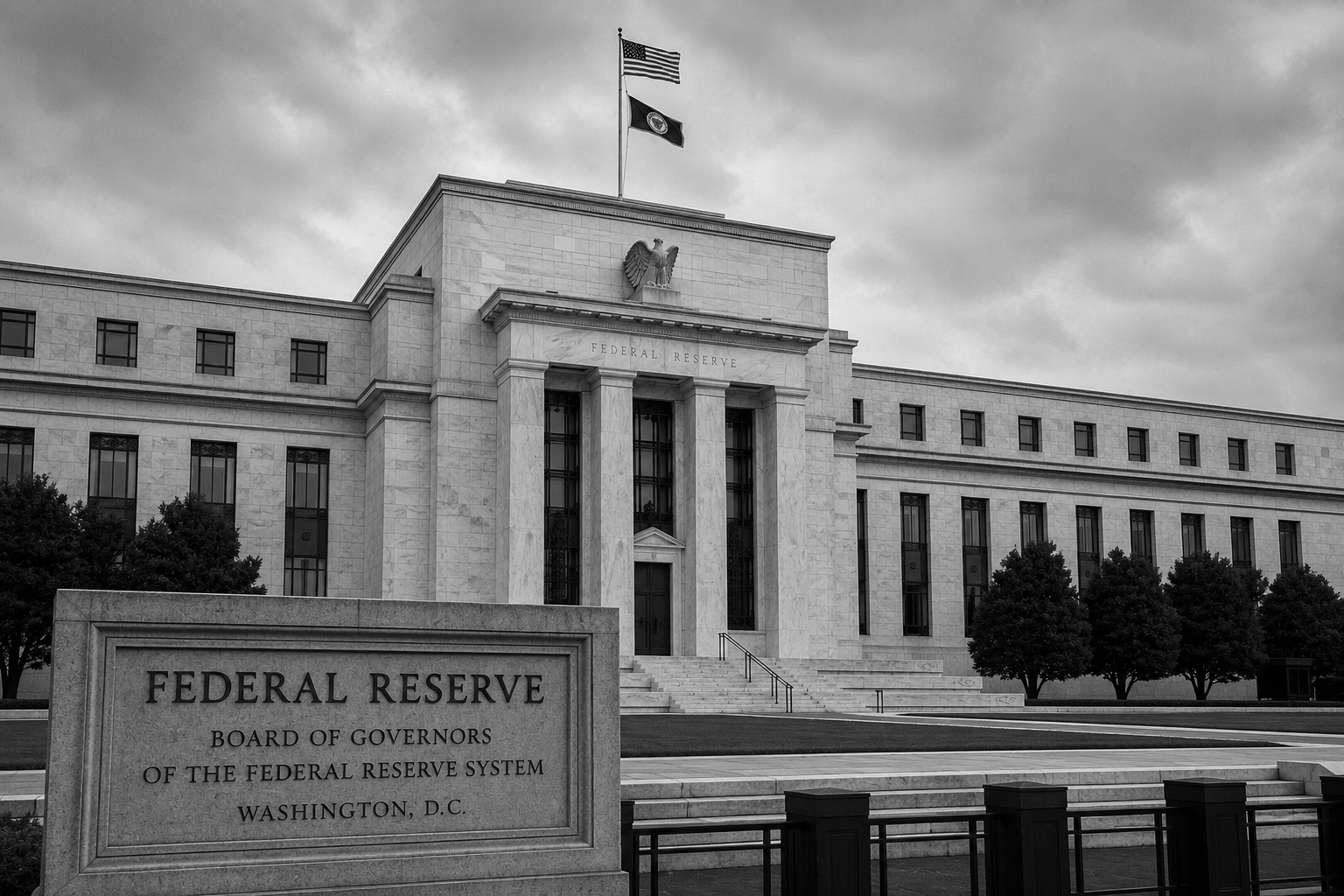
The Great Contraction: How Gold Turned a Crisis Into a Catastrophe
Once the banking panics began in 1930, the gold standard turned a bad situation catastrophic. As depositors lost confidence and began withdrawing funds, many chose to hold actual gold rather than paper currency or bank deposits. This domestic drain consumed the Federal Reserve's gold reserves. Simultaneously, foreign investors — fearing a devaluation of the dollar — began converting their dollar holdings into gold and shipping it out of the country. Between these two forces, the Fed's free gold reserves shrank rapidly.
The Fed's response was to raise interest rates further to protect its gold position — precisely the opposite of what the economy needed. In September 1931, after Britain abandoned gold and speculators attacked the dollar, the Fed raised its discount rate from 1.5% to 3.5%. According to Britannica, the money supply in the United States declined 31% between 1929 and 1933. The Federal Reserve, constrained by its gold obligation, allowed this contraction to proceed.
Milton Friedman and Anna Schwartz, in their landmark A Monetary History of the United States (1963), argued that this monetary contraction was the central cause of the Depression's depth. Their evidence was stark: the Fed allowed the money stock to fall by 33% while one-fifth of commercial banks closed and real money income fell 36%. A central bank empowered to expand credit could have intervened at any point. The gold standard meant it could not — or would not — do so.
Britain's Exit: The First Crack in the System
On 19 September 1931, the Bank of England did what it had insisted was unthinkable: it abandoned the gold standard. The immediate trigger was a speculative attack on sterling. Loans of £50 million from the American and French central banks had been exhausted within weeks. With gold draining at an unsustainable rate, the Bank chose to let the pound float rather than destroy the economy defending an unsustainable parity.
The pound fell immediately — from $4.86 to $3.89, and to $3.37 by the end of 1931. What happened next surprised everyone. Rather than triggering the inflationary collapse that gold standard defenders had predicted, Britain's departure freed the Bank of England to cut interest rates. The Bank rate fell from 6% to 2% by 1932. Exports became more competitive. Industrial production began rising. By 1934, Britain's industrial output had surpassed its 1929 level. One analysis cited by the CEPR concluded that leaving gold "decisively benefited Britain's economy and started its recovery from the Great Depression."
The demonstration effect was immediate. Within a month of Britain's departure, each of the Scandinavian countries, most sterling-linked British Empire dominions, and several other nations had followed. Japan left gold in December 1931 and staged what many historians consider the fastest recovery of any major economy in the decade. The countries that escaped the gold standard's constraints earliest recovered earliest — a pattern that Eichengreen and Sachs documented in their influential 1985 study and that has been repeatedly confirmed since.
Roosevelt's Gold Confiscation: Breaking the System From Within
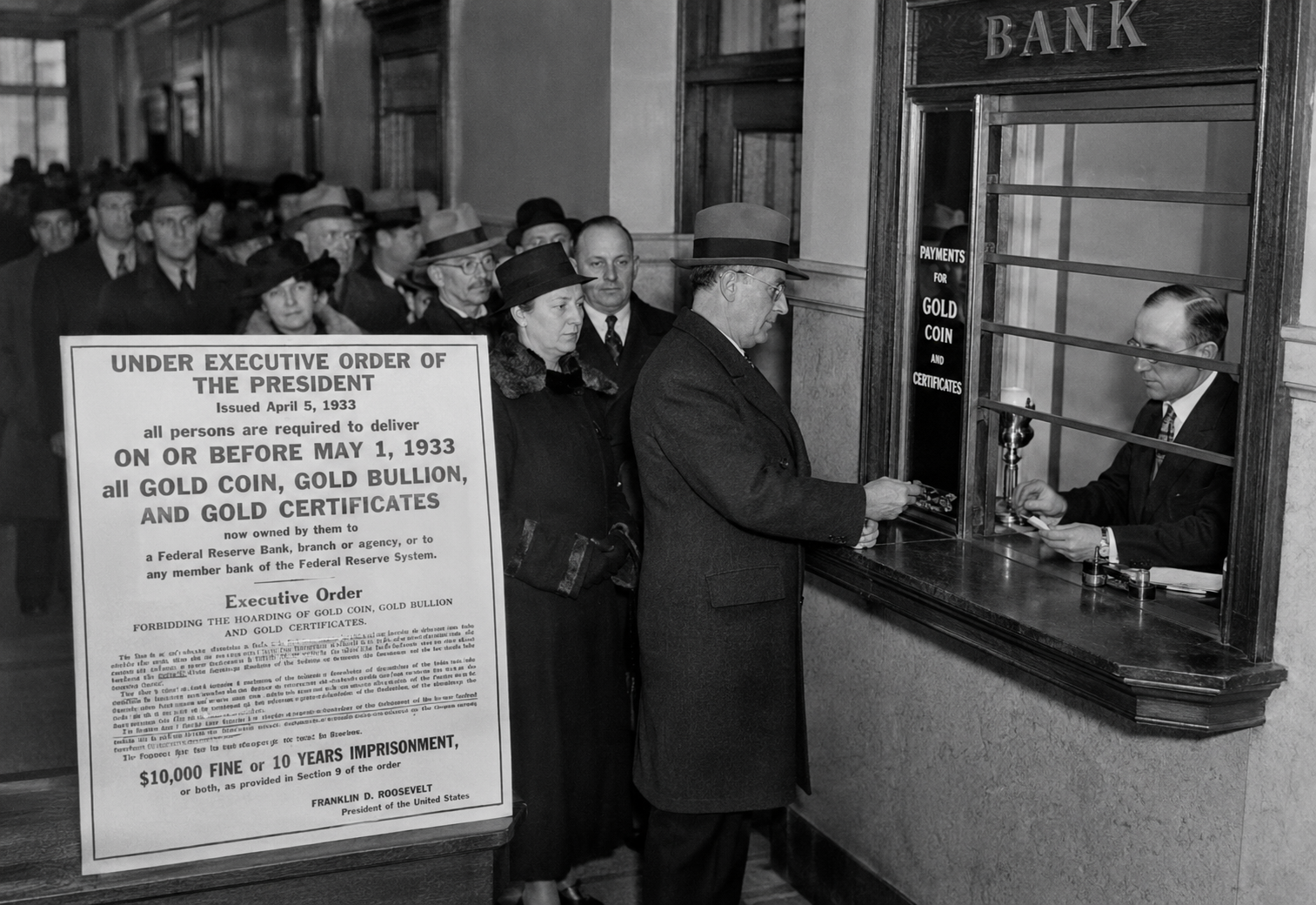
By the time Franklin Roosevelt took office on 4 March 1933, the gold standard had become an acute emergency. The Federal Reserve Bank of New York's gold reserves had fallen below the legally required minimum. Governor George Harrison sent an urgent message to Washington stating he would "no longer take responsibility" for running the bank with deficient reserves. Roosevelt declared a national banking holiday on his third day in office.
On 5 April 1933, Roosevelt issued Executive Order 6102, which required virtually all Americans to surrender their gold coins, gold bullion, and gold certificates to the Federal Reserve. Citizens received $20.67 per troy ounce in exchange. Violation carried penalties of up to $10,000 and ten years in prison. The stated rationale was to stop gold hoarding, which was restricting the money supply and preventing recovery. By centralising gold in the Treasury, the government would gain the flexibility to expand credit.
On 20 April, Roosevelt issued a proclamation formally suspending the gold standard, prohibiting gold exports and ending convertibility. Then came the Gold Reserve Act of January 1934. It transferred all Federal Reserve gold to the Treasury and reset the official gold price from $20.67 to $35 per troy ounce — devaluing the dollar by approximately 41%. The gold that Americans had surrendered at $20.67 nine months earlier was now officially worth $35. The Treasury booked the difference as profit; the citizens who had complied absorbed the loss.
The economic effect was significant. With the dollar devalued, gold flowed into the United States. Treasury gold holdings tripled from 6,358 metric tonnes in 1930 to 19,543 metric tonnes by 1940. The M1 money supply grew at an average rate of roughly 10% per year between 1933 and 1937. Recovery, while incomplete and interrupted by a sharp recession in 1937–38, had begun.
France's Folly: The Cost of Staying on Gold
The contrast with France is instructive and damning. France had returned to the gold standard in 1928 at an undervalued rate, giving it a competitive advantage and allowing it to accumulate enormous gold reserves. When the Depression hit, France's strong gold position made policymakers reluctant to abandon a system that appeared to be working in France's favour. The government and the Bank of France refused to expand the money supply, citing gold standard orthodoxy.
The consequences unfolded slowly and then catastrophically. While Britain, the United States, and most of the world were recovering in the mid-1930s, France remained in depression. Industrial production stagnated. Unemployment remained high. As its gold-standard competitors devalued and became more competitive, French exporters were priced out of international markets. France finally abandoned gold in September 1936 — five years after Britain and three after the United States. Recovery followed devaluation almost immediately. France was the last proof, if any were needed, that the gold standard had been the disease, not the cure.
What Replaced the Gold Standard: Bretton Woods and Beyond
The interwar period's monetary chaos — competitive devaluations, fragmented exchange rate regimes, and the collapse of international trade — provided the backdrop for the Bretton Woods Conference of July 1944. Forty-four nations met in New Hampshire to design a new post-war monetary order, guided by British economist John Maynard Keynes and U.S. Treasury official Harry Dexter White.
The system they created was a compromise: a gold-dollar standard. The dollar was pegged to gold at $35 per ounce — Roosevelt's 1934 rate — and all other currencies were pegged to the dollar. Countries could not freely convert their currencies into gold, but they could convert dollars into gold through the U.S. Treasury. The system preserved the stability advantages of a fixed-rate regime while giving governments more flexibility to manage their domestic economies.
Bretton Woods lasted until August 1971, when President Nixon announced that the United States would no longer honour dollar-gold convertibility. The post-war accumulation of dollar liabilities had made the $35 peg untenable. With the Nixon Shock, the last link between currency and gold was severed, and the era of floating exchange rates began. The lesson of the 1930s had taken nearly forty years to fully unwind.
What This Means Today
The Danger of Rigid Monetary Systems
The interwar gold standard is now the canonical example of how a rigid monetary system can transform a financial crisis into an economic catastrophe. When the tools of monetary policy — interest rate cuts, money supply expansion, currency depreciation — are unavailable, governments cannot cushion the blow of a major shock. The 2008 crisis response, which involved aggressive rate cuts and quantitative easing, was designed precisely to avoid the mistakes the gold standard had imposed on 1930s policymakers.
Gold Standard Nostalgia: A Warning
Proposals to return to a gold standard surface periodically, usually during periods of inflation anxiety. The historical record offers a clear verdict: gold standards impose enormous costs during deflationary shocks and crises. The countries that escaped those costs in the 1930s were the ones that abandoned gold fastest. Any monetary system that prevents a central bank from acting as a lender of last resort during a banking panic creates the same risks today that it did in 1931.
Currency Devaluation as Policy Tool
Roosevelt's 1933 gold confiscation and dollar devaluation remain controversial — especially the fact that citizens surrendered gold at $20.67 that the government promptly revalued to $35. But the economic outcome is not controversial: devaluation worked. It freed monetary policy, stimulated exports, and enabled the recovery that the gold standard had made impossible. The episode stands as one of the most consequential currency interventions in modern history, and a template for how monetary policy can be weaponised in a crisis.
The Architecture of Trust
Every monetary system ultimately rests on trust — trust that the issuing authority will honour the rules of the system and manage it competently. The interwar gold standard failed because trust in its management collapsed: countries competed to accumulate reserves rather than cooperate to manage the system. The lesson of Bretton Woods was that international monetary stability requires active coordination, not just shared rules. In an era of floating exchange rates and currency tensions, that lesson remains as relevant as it was in 1944.
Frequently Asked Questions
How did the gold standard cause the Great Depression?
The gold standard prevented governments from expanding their money supplies during the crisis, forcing deflation. The Federal Reserve's decision to raise interest rates in 1928–29 — partly to protect gold reserves — triggered contractions globally. When bank panics accelerated gold hoarding, the standard amplified the monetary contraction rather than allowing corrective action. Economists Eichengreen, Temin, and Bernanke have all identified the gold standard as a central mechanism in spreading and deepening the Depression.
Why did Britain leave the gold standard in 1931?
Britain abandoned the gold standard on 19 September 1931 after a speculative attack on sterling exhausted emergency loans from American and French central banks. The pound was widely regarded as overvalued at the $4.86 parity set in 1925. Once free of the gold constraint, the Bank of England cut interest rates, the pound fell to $3.37 by year-end, and British industry began recovering. Industrial production exceeded its 1929 level by 1934.
What was Executive Order 6102?
Signed by President Roosevelt on 5 April 1933, Executive Order 6102 required most Americans to surrender their gold coins, bullion, and certificates to the Federal Reserve at $20.67 per troy ounce, under penalty of fines up to $10,000 and ten years in prison. Nine months later, the Gold Reserve Act of 1934 reset the official gold price to $35 per ounce, devaluing the dollar by approximately 41% and freeing monetary policy to support recovery.
Which countries recovered from the Depression fastest?
Countries that left the gold standard earliest recovered earliest. Britain (left September 1931) saw industrial production above 1929 levels by 1934. Japan (left December 1931) staged the fastest major-economy recovery of the decade. The United States (left April 1933) began a sustained recovery from mid-1933 onwards. France, which clung to gold until September 1936, remained in depression throughout the mid-1930s. The correlation between gold exit date and recovery timing is one of the most robust findings in interwar economic history.
What replaced the gold standard after the Depression?
The Bretton Woods system, agreed by 44 nations in July 1944, replaced the interwar gold standard. Under Bretton Woods, all currencies were pegged to the U.S. dollar, and the dollar was pegged to gold at $35 per ounce. This gold-dollar standard lasted until August 1971, when President Nixon ended dollar-gold convertibility — the so-called Nixon Shock — ushering in the era of floating exchange rates.
Why did France stay on the gold standard so long?
France had returned to gold in 1928 at an undervalued rate, giving it competitive advantages and large gold reserves. French policymakers and the financial establishment believed their strong reserve position protected them and resisted abandoning a system that appeared to be working in France's favour. The result was that France remained in depression while the rest of the world recovered. France finally left gold in September 1936, after which recovery followed swiftly.
What lessons does the 1930s gold standard hold for today?
The principal lesson is that monetary rigidity amplifies crises. When central banks cannot cut rates, expand money supplies, or allow currencies to depreciate, financial shocks become economic catastrophes. The aggressive monetary responses to the 2008 crisis and the 2020 pandemic were consciously designed to avoid the mistakes the gold standard imposed in the 1930s. Proposals to restore any form of commodity-backed currency require confronting this history directly.