When Alexander the Great crossed the Hellespont in 334 BCE, he was technically bankrupt. His father Philip II had left a magnificent army and a nearly empty treasury. To fund the invasion, Alexander had borrowed heavily from the Macedonian nobility, exempted them from taxation, and granted away royal lands. According to ancient sources, he had perhaps 70 talents in reserve — enough to pay his army for about thirty days. His generals thought the expedition was madness.
Thirteen years later, he had seized approximately 180,000 talents of gold and silver from the Persian empire — the equivalent, by some estimates, of several decades of Athenian state revenue — and had distributed enormous quantities of it to his soldiers, his cities, and his economy. He had founded more than twenty cities, the most important of which would become the ancient world's greatest metropolis. He had spread the Greek language, Greek coinage, Greek administrative practice, and Greek commercial networks from the Aegean to the banks of the Indus River.
Alexander was not an economist. He was a warrior. The economic empire he created was, in large part, a by-product of military conquest rather than a planned commercial programme. Modern historians debate sharply whether he was a visionary commercial architect or a brilliant plunderer whose economic consequences were mostly unintended. The answer, as with most things about Alexander, lies somewhere complicated. This is the full story.
The Starting Position: Macedonia and the Persian Economy Before Alexander
To understand the economic transformation Alexander produced, it helps to understand the two economic systems he was connecting — and the enormous gap between them.
Macedon in 336 BCE was an agricultural kingdom on the northern fringes of the Greek world — militarily formidable after Philip II's reorganisation, but economically modest. Athens, Corinth, and other city-states had developed sophisticated commercial economies, banking systems, and coinage. The Athenian silver tetradrachm — the famous 'owl' coin, stamped with the head of Athena and an owl on the reverse — was the dominant trading currency across the eastern Mediterranean. Athenian owls have been found in archaeological contexts from Spain to India, testifying to Athens' commercial reach.
The Persian Empire, by contrast, was fabulously wealthy but economically conservative. The Achaemenid kings had accumulated treasure on a scale the Greek world could barely imagine. The Persian Daric — a gold coin of approximately 8.4 grams of pure gold — had been the international reserve currency of the Near East since Darius I introduced it around 522 BCE. But the Achaemenid economy stored rather than circulated this wealth. Vast quantities of gold and silver sat in the royal treasuries at Persepolis, Susa, and Ecbatana as bullion, hoarded rather than monetised. From an economic perspective, this was treasure in a vault — potentially enormous, but contributing little to the productive economy.
Alexander's conquest forcibly unlocked that vault.
The Great Redistribution: 180,000 Talents and Its Consequences
The scale of Persian wealth Alexander seized was staggering. City by city, treasury by treasury, the haul accumulated. Damascus in 333 BCE yielded Darius III's war chest. Susa, in 331 BCE, added an estimated 50,000 talents. Persepolis in 330 BCE — the ceremonial heart of the Achaemenid empire — provided approximately 120,000 talents. Ecbatana contributed 7,000 talents of gold bullion alone. The combined total from all conquests reached an estimated 180,000 talents — or roughly 5,400 metric tonnes of silver equivalent, a figure that makes it arguably the most substantial single appropriation of wealth in ancient history.
Alexander's response was to spend it. He paid bonuses to his soldiers. He funded the construction of new cities. He settled veterans in colonies across Asia. He paid the wages of a growing army — which expanded from roughly 30,000 at the campaign's start to over 100,000 by the Indian campaigns. Treasure that had sat inert in Persian vaults for generations was released into circulation across an enormous territory.
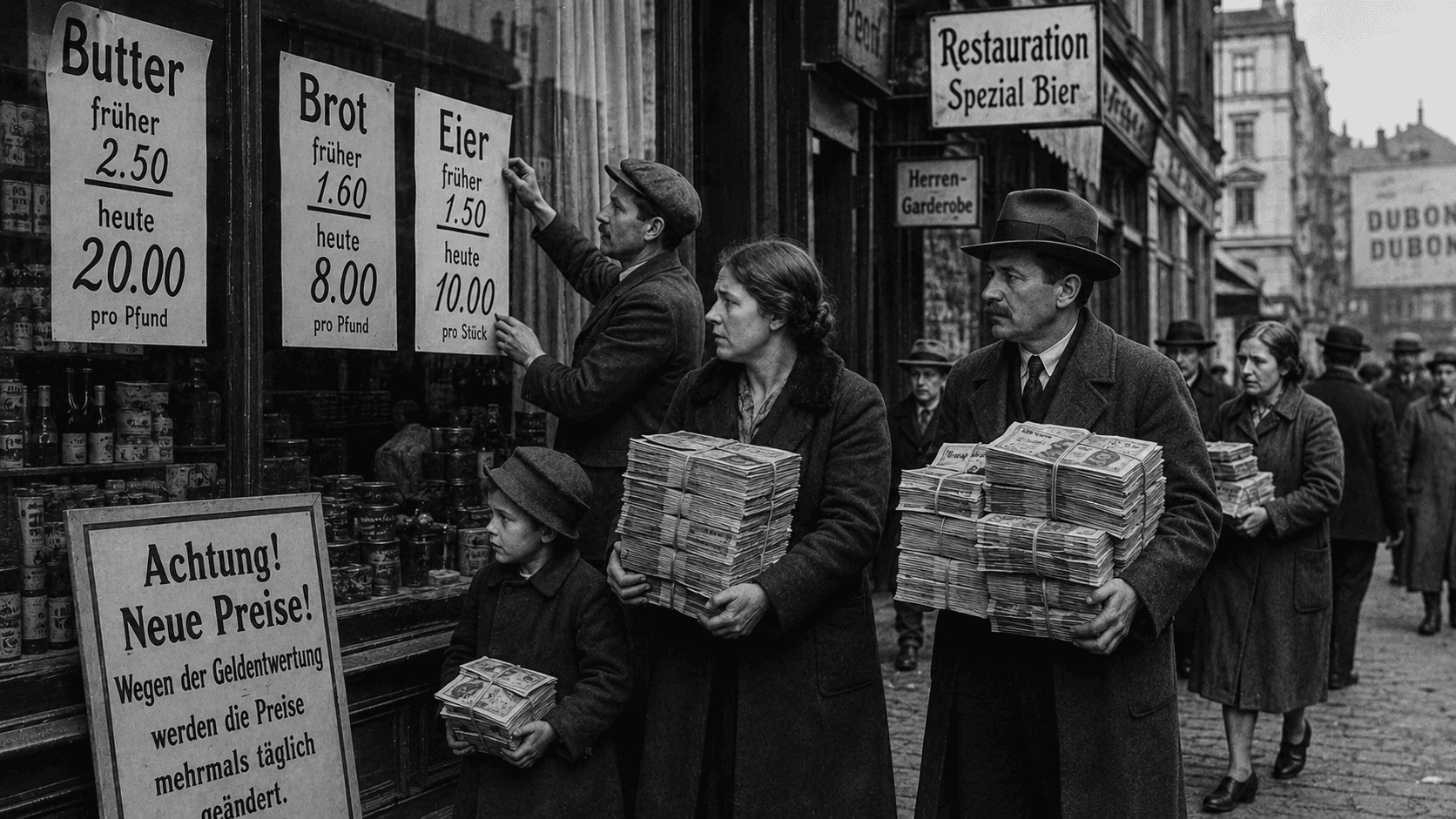
The economic consequence was immediate and, in modern terms, entirely predictable: inflation. Greek historian and academic Grigorios Charalampidis has documented that wheat prices in Athens rose from 5 drachmas per medimnos to 16 drachmas by 330 BCE — a more than threefold increase. Army wages rose too: Alexander's pay rates climbed approximately 14% after the Persian treasury haul, reflecting the excess supply of money in his military economy. Too much silver chasing too few goods had produced the ancient world's first documented case of conquest-driven monetary inflation.
The Tetradrachm: Standardising Money Across a Continent
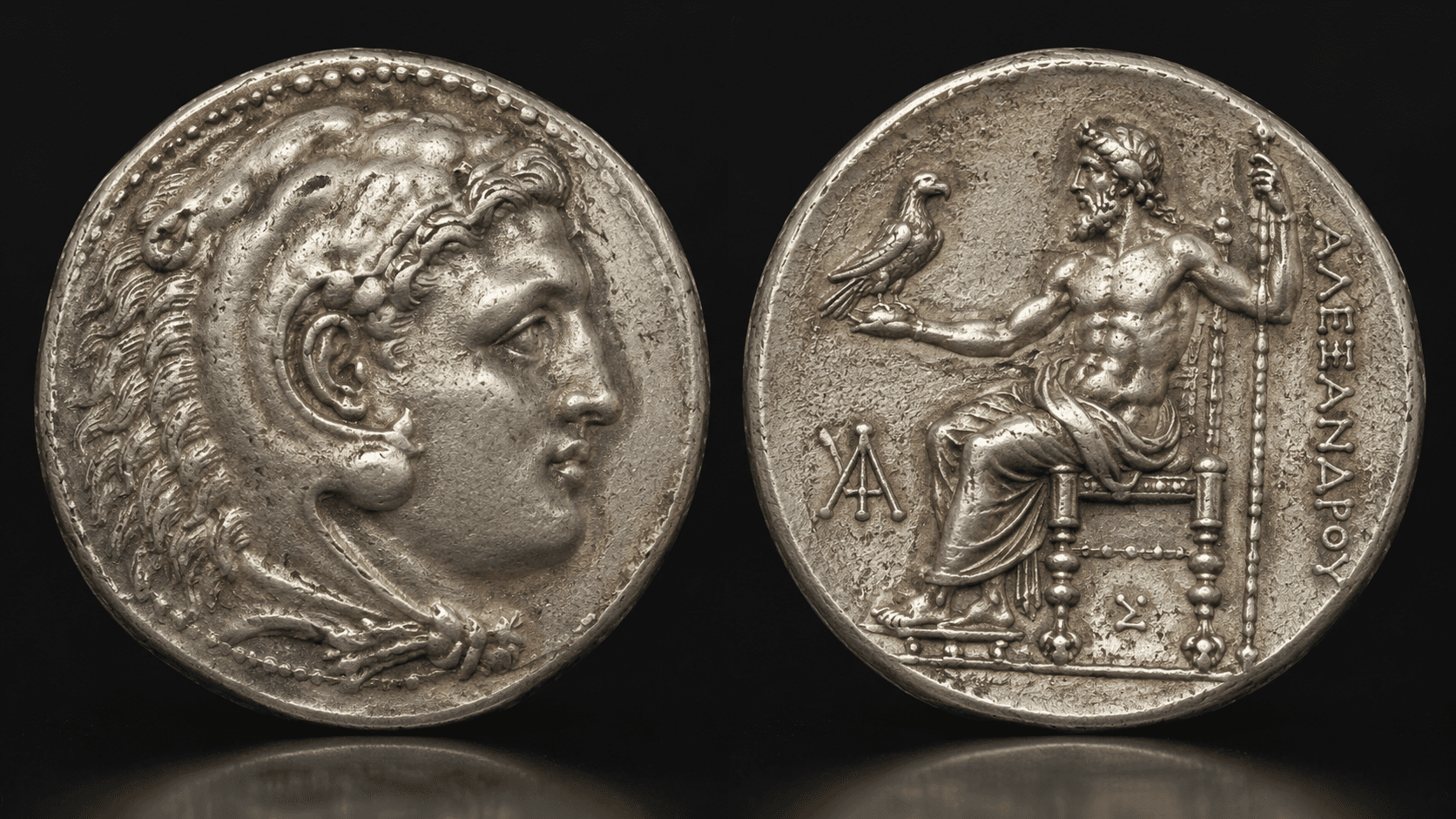
One of Alexander's most consequential economic acts was not a battle or a city founding — it was a coin. The Alexandrian silver tetradrachm became the standard currency of his campaign and, through his successor kingdoms, of the entire Hellenistic world.
Before Alexander, the Greek world used a bewildering variety of local coinages, each city-state or kingdom minting to its own weight standard and design. Trade between regions required constant currency exchange and valuation. The Athenian tetradrachm had achieved wide circulation, but it was a city-state coin, not an imperial one. What Alexander created was something different: a coin issued in consistent weight and silver purity across dozens of mints, from Macedonia to Bactria, bearing his own iconography — the head of Heracles on one side, Zeus enthroned on the other.
The practical commercial effect was transformative. A merchant in Babylon dealing with a trader from Alexandria could accept tetradrachms from either end of the empire, knowing they were the same standard. Contracts could be denominated in a common currency. Banking — which had existed in primitive forms in Greek cities — could now operate across a far wider network because the monetary unit was predictable.
Historian Frank Holt, in his scholarly reassessment The Treasures of Alexander the Great, pushes back against the more enthusiastic versions of this narrative. He argues that Alexander was not particularly interested in his own coinage as a policy tool, was slow to replace local currencies, and did not fully monetise the Persian bullion he seized. The reality, Holt suggests, was messier: barter economies persisted throughout the conquered territories alongside the new coinage; temples accumulated coins as dedications rather than circulating them; and large quantities of bullion were never struck into coin at all. The monetary revolution was real — but it was gradual, partial, and less intentional than it sometimes appears in popular accounts.
Alexandria: The City as an Economic Instrument
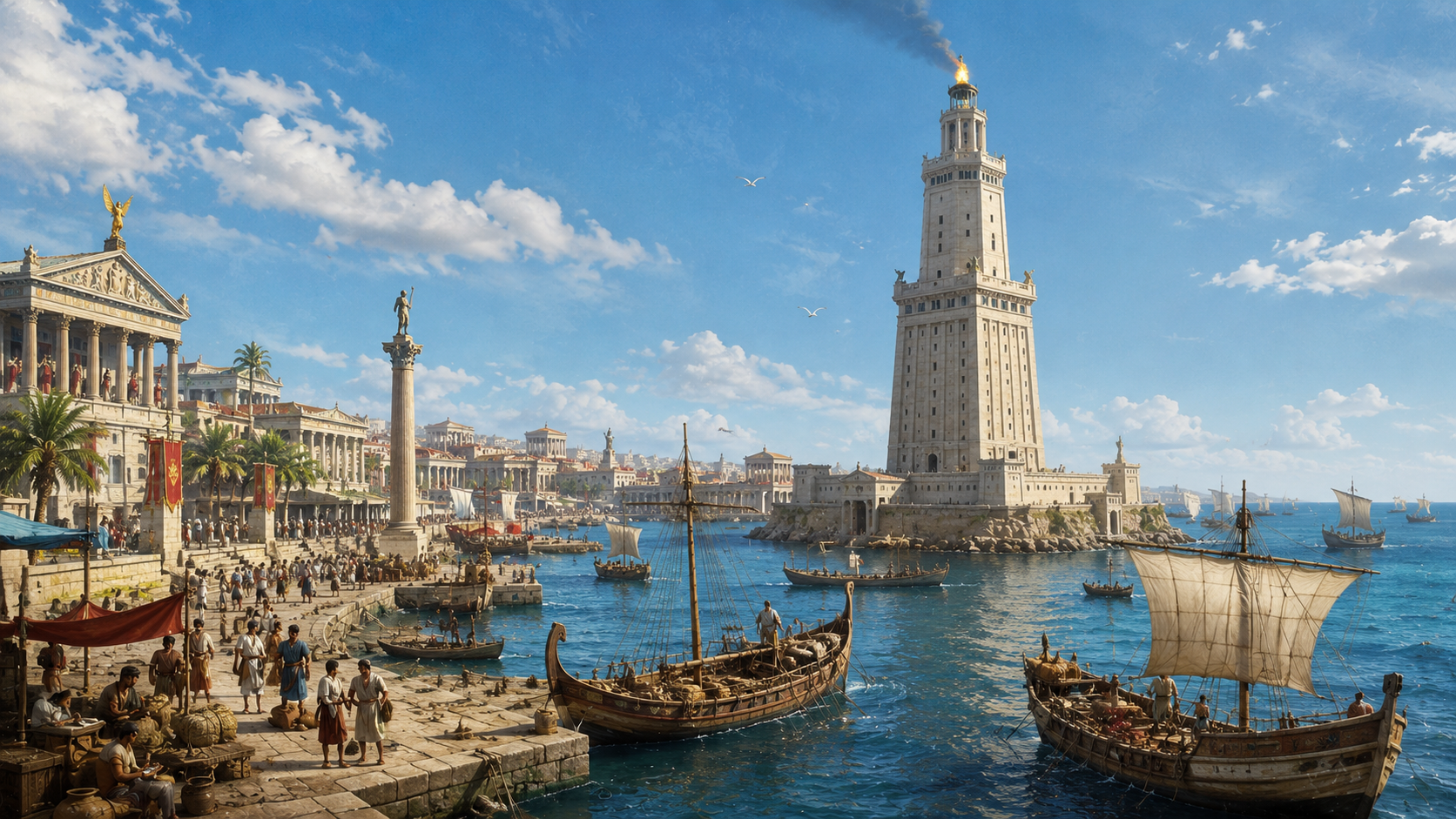
Of the more than twenty cities Alexander founded — most of them named Alexandria — none was more consequential than Alexandria in Egypt, founded in 331 BCE. The site selection was Alexander's own: a narrow strip of land between Lake Mareotis and the Mediterranean coast, with a superb natural harbour, immediate access to the Nile delta, and a position from which Mediterranean, African, and Asian trade routes converged.
Within a generation of its founding, Alexandria had become the ancient world's largest city. Under the Ptolemies — who inherited Egypt after Alexander's death — it was transformed into an extraordinary commercial machine. The great harbour accommodated hundreds of vessels simultaneously. The Pharos lighthouse, one of the seven wonders of the ancient world, guided ships into port across the eastern Mediterranean. The city controlled Egypt's grain exports — the food supply on which much of the ancient world depended — and developed a sophisticated system of warehousing, weighing, and commercial law.
The Ptolemaic economic system around Alexandria was also innovative in ways that prefigure modern managed economies. All foreign coins entering Egypt had to be exchanged for Ptolemaic coinage at rates the state controlled — effectively creating a closed currency system that gave Egypt a structural commercial advantage over its trading partners. State monopolies on papyrus, linen, and oil production generated revenue that financed the Ptolemies' military and cultural expenditures. The Library of Alexandria, which attracted scholars and intellectuals from across the Hellenistic world, also served an economic function: it was a centre of agricultural research, astronomical navigation, and geographic knowledge that enhanced the commercial capabilities of Ptolemaic Egypt.
Hellenization: The Commercial Language of an Empire
Perhaps Alexander's most durable economic legacy was not a coin or a city but a language. Koiné Greek — 'common Greek' — became the lingua franca of trade, administration, correspondence, and intellectual life across the entire Hellenistic world and beyond. From Sicily to Bactria, merchants, scribes, tax collectors, and diplomats communicated in the same tongue.
The commercial significance of a shared language cannot be overstated. Before Alexander, a merchant trading between Egypt and Mesopotamia required interpreters, faced different legal systems, used incompatible measurement systems, and navigated different administrative cultures. After Alexander, a Greek-speaking merchant could operate from Alexandria to Antioch to Seleucia-on-Tigris using the same language, the same legal concepts (drawn from Greek commercial law), and broadly the same monetary standards. The transaction costs of long-distance trade fell significantly.
Hellenization also meant the export of Greek commercial infrastructure — not just language but institutions. The agora (marketplace), the stoa (covered commercial arcade), banking and credit practices, standard weights and measures, and written contracts in Greek all followed Alexander's army and his successor kingdoms eastward. New cities founded on the Greek model — Antioch, Seleucia, Pergamon, Dura-Europos — became commercial nodes that connected previously isolated regional economies into a single, if politically fractured, trading zone.
The Successor Kingdoms: Inheriting and Developing the Commercial Infrastructure
Alexander died in Babylon in June 323 BCE, aged 32, before he could consolidate or systematically develop the economic empire his conquests had created. His death triggered decades of warfare among his generals — the Diadochi — as they carved up his territories. But crucially, the economic infrastructure survived the political fragmentation. Three major kingdoms emerged: the Ptolemaic in Egypt, the Seleucid across the Near East and Persia, and the Antigonid in Macedonia. Together, they inherited and developed what Alexander had created.
The Ptolemaic kingdom
Egypt under the Ptolemies became the wealthiest state in the Hellenistic world. Its agricultural surplus — grain from the Nile delta — fed much of the ancient Mediterranean. Its control of Red Sea ports, particularly Berenice, enabled a growing sea trade with Arabia, East Africa, and eventually India. When an Indian navigator revealed to Ptolemy VII the secret of the monsoon winds around the end of the 2nd century BCE — allowing ships to sail directly across the Indian Ocean rather than hugging the coast — Alexandria's trade with India transformed entirely. The monsoon route halved journey times, reduced costs, and made luxury goods from the East far more accessible to Mediterranean consumers.
The Seleucid Empire
The Seleucid Empire, at its peak, stretching from the Aegean coast to Bactria and the borders of India, controlled the overland arteries of ancient commerce. Seleucia-on-Tigris — founded near Babylon — was the empire's commercial capital and the junction where Mediterranean trade routes met the paths to Central Asia and India. Three routes to India ran from this hub: two overland through Persia and Bactria, one by sea through the Persian Gulf. Antioch-on-Orontes served as the western terminus, connecting the overland network to Mediterranean shipping. The Seleucid kingdom founded hundreds of Greek cities across modern Iraq, Iran, Afghanistan, and Central Asia — each one a commercial node, a mint, and an outpost of Greek administrative practice in territories that had never known it.
The early Silk Road
The corridors Alexander's campaigns had traced — through Bactria (modern Afghanistan), Sogdiana (modern Uzbekistan), and the approaches to the Indus Valley — were precisely the routes that the Han Dynasty's Silk Road would formalise from the 2nd century BCE onward. Hellenistic cities along these corridors — Ai-Khanoum in Bactria, Maracanda (Samarkand), Taxila in the Punjab — were the western nodes of the emerging transcontinental trade network. Greek Bactrian kingdoms survived Alexander's death by over a century, maintaining the commercial and cultural connections that linked the Mediterranean world to China's western frontier.
The Debate: Was Alexander an Economic Architect or a Plunderer?
Modern scholarship is divided on this question, and the division reflects genuine complexity. The traditional view — developed by historians from Johann Gustav Droysen in the 19th century through much of the 20th — held that Alexander's conquests deliberately created a unified Hellenistic economy, monetised stagnant Persian treasure, stimulated trade, and opened the world to Greek commercial dynamism. On this reading, Alexander was a visionary who transformed the ancient world economy.
Frank Holt's reassessment challenges this narrative directly. "Alexander the CEO is dead," he writes — meaning the idea of Alexander as a planned commercial architect is unsupported by the evidence. Holt argues that the monetisation of Persian treasure was incomplete, that local currencies persisted throughout the conquered territories, that the primary beneficiaries of the treasure haul were Alexander's own soldiers and the Macedonian elite, and that — given the inflation, the disruption to Persian administrative systems, and the decades of warfare among his successors — the net economic benefit to the ordinary peoples of the ancient world was at best ambiguous.
The most defensible position lies between these poles. Alexander was not a commercial planner. His economic legacy was a by-product of military ambition — but that does not make it less real or less consequential. The cities he founded, the coinage he standardised, the language his administration spread, and the trade routes his campaigns opened had transformative effects on the ancient economy that persisted for three centuries after his death. Whether or not he intended it, the Hellenistic world economy he inadvertently created was the most commercially integrated the ancient world had known.
What This Means Today
Conquest as monetary policy
Alexander's Persian haul was history's most dramatic example of wealth redistribution through military conquest. The release of 180,000 talents from hoarded treasure into active circulation was, in effect, a massive monetary expansion — equivalent in modern terms to printing a huge quantity of new money and distributing it through an army. The inflationary consequences (wheat prices tripling in Athens) were entirely predictable from a modern monetary perspective. Ancient economies lacked the concepts to analyse this, but the mechanism was identical to any other money supply shock.
The value of a commercial lingua franca
Koiné Greek's role in Hellenistic commerce prefigures the role of English in modern global trade and the U.S. dollar in modern finance. A shared language reduces transaction costs, enables contract enforcement across jurisdictions, and lowers the barriers to long-distance commerce. The Hellenistic case suggests that a commercial lingua franca — whether a language or a currency standard — can persist long after the political power that created it has fragmented. Koiné Greek remained the language of Eastern Mediterranean commerce long after the last Hellenistic king was dead.
Cities as economic instruments
Alexander's founding of cities — particularly Alexandria — was the most direct and intentional form of economic architecture in his reign. Every city was a mint, a market, a node in a communication network, and a settlement that attracted merchants, artisans, and administrators. The city as a planned economic instrument — something the Romans would later develop to its fullest expression — was pioneered on a continental scale by Alexander. Modern economic geographers studying how infrastructure investment creates commercial networks are, in a sense, studying the same phenomenon Alexander deployed across three million square miles.
The fragility of empire-built commercial systems
The Hellenistic economy was real and significant — but it was also fragile. It depended on political stability, which the Wars of the Diadochi repeatedly shattered. When Rome finally absorbed the last Hellenistic kingdoms (Pergamon in 133 BCE, Ptolemaic Egypt in 30 BCE), it inherited a sophisticated commercial infrastructure — but one that had never reached its full potential because the political framework never stabilised long enough. The lesson is familiar: trade networks depend on institutional stability to mature. Alexander built the pipes. The water never fully flowed.
Frequently Asked Questions
What was Alexander the Great's economic impact?
Alexander's conquests produced three major economic effects: the release of approximately 180,000 talents of hoarded Persian treasure into active circulation (triggering inflation across the ancient world), the spread of Greek coinage — particularly the silver tetradrachm — as a common trading currency from Greece to Bactria, and the founding of commercial cities (above all Alexandria in Egypt) that became the nodes of a new Hellenistic trading network. The Greek language spread as the commercial lingua franca of a zone stretching from the Adriatic to the borders of India.
How much treasure did Alexander seize from Persia?
Alexander seized approximately 180,000 talents of gold and silver equivalent from the Persian empire across his campaigns (334–323 BCE) — the most substantial single appropriation of wealth in ancient history. The largest individual hauls came from Persepolis (~120,000 talents) and Susa (~50,000 talents) in 330 BCE. Historian Frank Holt notes that much of this was not fully monetised — significant quantities remained as bullion — but what was put into circulation still represented an enormous monetary shock to the ancient economy.
What was the silver tetradrachm, and why did it matter?
The Alexandrian silver tetradrachm was the standard coin of Alexander's campaigns and successor kingdoms — minted consistently in weight and purity at dozens of mints from Macedonia to Bactria. It replaced a patchwork of local currencies with a broadly common monetary standard, significantly lowering the transaction costs of long-distance trade. The Ptolemaic and Seleucid kingdoms continued to issue tetradrachm-based coinage after Alexander's death, maintaining the common monetary framework of the Hellenistic world for over two centuries.
Why did Alexander found Alexandria in Egypt?
Alexander personally selected the site in 331 BCE for its exceptional commercial geography: a superb natural harbour on the Mediterranean, direct access to the Nile delta, and a position where sea routes from Europe, Africa, and Asia converged. Under the Ptolemies, Alexandria became the ancient world's largest city and its most important commercial hub — controlling Egyptian grain exports, operating Red Sea routes to India, and managing a closed currency system that gave Egypt structural advantages in ancient trade.
What was Hellenization, and how did it affect trade?
Hellenization was the spread of the Greek language, culture, administrative practice, and commercial institutions across Alexander's conquered territories. In economic terms, it meant that Koiné Greek became the lingua franca of trade from the Adriatic to India; Greek commercial law and contract practices spread across the Near East; Greek city designs (with agoras, covered markets, and standardised weights) were replicated from Egypt to Bactria; and banking and credit instruments developed in Greek cities were transplanted into previously non-monetised economies.
How did Alexander's conquests shape the Silk Road?
The corridors Alexander's campaigns opened through Bactria and Sogdiana (modern Afghanistan and Uzbekistan) became the western end of the Silk Road, formalised by the Han Dynasty from around 130 BCE. Hellenistic Greek cities along these routes — Ai-Khanoum in Bactria, Maracanda (Samarkand) — served as commercial nodes connecting Mediterranean commerce to Central Asia. Greek Bactrian kingdoms surviving Alexander's death by over a century maintained these connections, providing the institutional infrastructure that the Silk Road later inherited.
Was Alexander the Great a good economic manager?
Scholarly opinion is divided. The traditional view credits Alexander with monetising stagnant Persian treasure and stimulating the Hellenistic economy. Historian Frank Holt's reassessment argues he was primarily a warrior who mismanaged much of the plunder — leaving corrupt treasurers in place, failing to fully monetise the bullion, and producing inflation rather than sustainable growth. The most balanced view is that Alexander was not an economic architect, but his campaigns produced an economic transformation — shared language, standardised coinage, new cities, and opened trade routes — whose consequences outlasted his empire by centuries.